
Many innovative startups and research institutions move to prototyping and low volume trial production once their R&D teams finalize new project drawings. A common dilemma soon follows. Unsure about real world market response for their product, teams hesitate to invest heavily in expensive steel molds. Without in depth knowledge of manufacturing processes, they struggle with process selection, cost control and material decisions. Rapid casting offers a practical solution for these small batch development pain points.
What Is Small Batch Vacuum rapid Casting for Bridge Production?
For startup founders and small business teams, knocking out 10-50 units before committing to steel molds really makes sense. Data from just one single prototype can be hit or miss. It won’t show you how parts will actually hold up under real assembly stress, nor will it prove whether your finished look stays consistent across full run production.This is why low-volume production plays an important role in bridging the gap between prototyping and mass production
With rapid casting, you don’t need steel tooling at all. If your design doesn’t work quite as expected, you can tweak it fast and run rounds of testing over and over. That small batch also lets you gauge real market reception and collect genuine feedback from customers. You keep overall project risk much lower this way.
How Rapid Casting Works for Small Batch Production
Creating the Master Pattern
We start off by building the master pattern. This reference part can come from either SLA 3Dprinting or CNC machining.
TIPS : If you want spotless final part surfaces, polish the master pattern thoroughly before making your silicone mold. Every single scratch and tiny flaw on the master gets copied right onto your cast parts.You turn to SLA 3D printing for complex geometries. CNC machining makes more sense if tighter dimensional accuracy is what you require.
Making Silicone Molds
Silicone is poured around the master pattern when it locks in every contour and fine surface feature of the original model.Vacuum Rapid Casting and Part Product
PU resin fills the silicone mold under vacuum to avoid air bubbles. Once the resin hardens completely, we take the finished parts out of the mold
How Many Parts Can One Silicone Mold Produce?
A single silicone mold won’t pump out parts forever. Several real world things determine how long it actually holds up.
Your choice of PU resin makes quite a difference. Certain resin formulas eat away at silicone much faster than others. Then there’s your part design to think about. Deep undercuts, sharp edges and thin wall sections can really stress the mold when you pop parts loose during demolding. The silicone stretches a little bit each time you take a finished piece out. Complex geometries wear that mold down faster, plain and simple.
How operators handle the mold day to day also shifts total output. Careful demolding and consistent handling help extend how long your silicone mold lasts. For reference, one silicone mold usually delivers ten to thirty usable cast parts. If your part is tricky to demold or you’re working with harsher resins, you will likely end up nearer the bottom of that range.
Why Use Rapid Casting for 10–50 Units?
- Lower initial costs, no steel tooling
- Faster turnaround, great for checking market feedback
- Good surface quality to run fit and assembly tests
- Lots of material choices available
Which Vacuum Casting Materials Are Best for Your Product?
ABS-Like PU Resin
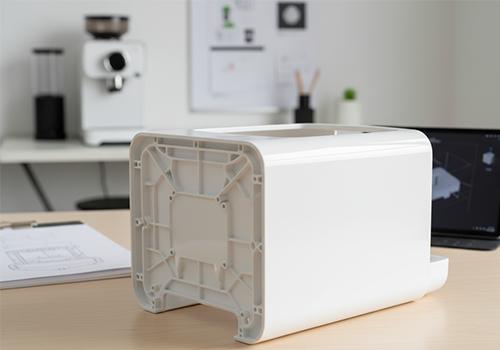
This material has solid rigidity, so it does not bend easily. It takes sanding and painting really well, and handles impacts nicely. It behaves much like ABS, making it a good fit for electronic housings, control panels and consumer electronics casings.
PC-Like and Transparent Resins
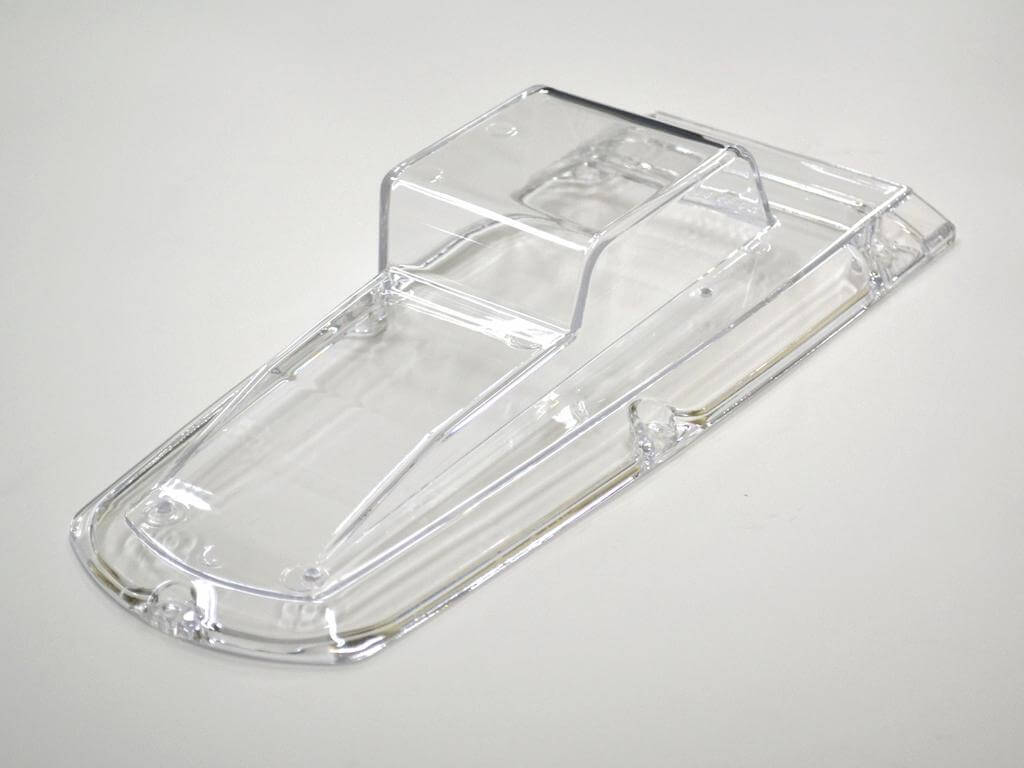
You can look right through parts made with PC-like and transparent resins, no need to cut samples open.You can easily inspect the fit of internal parts with this method. Transparent housings, indicator light covers, clear display pieces and optical aesthetic samples are great use cases for these materials. Keep one thing in mind though.Your choice of resin mix defines optical clarity impact strength and heat resistance for the part.They are not a stand in for production grade PC.
PP-Like PU Resin

This resin has springy rebound so it works well for flexible housings, snap fit joints and plastic parts built with elastic features. Even so, PP-like resins do not all share the same feel. Stiffer variants are a good match for simple snap clips that only lock into place once ,while softer and more flexible grades with strong rebound hold up for snaps you open and close repeatedly.
Soft Elastomer Resins
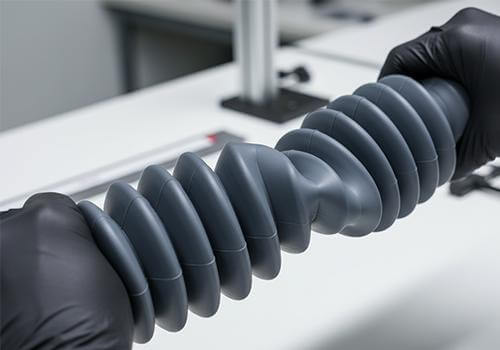
These types of resins are soft and elastic to the touch and they can spring back to their original shape after being compressed .These materials show up often for flexible protective sleeves cushion pads soft touch over mold pieces and different sealing prototypes.You check softness compression performance grip feel and alignment with your design.
| Material Type | Typical Products | Main Applications |
| ABS-Like PU |
Electronic housings, control panels |
Appearance validation, assembly testing |
| PC-Like / Clear PU | Transparent enclosures, display components | Transparent appearance validation, internal structure inspection |
| PP-Like PU | Flexible housings, selected snap-fit parts | Fit validation, functional testing |
| Soft Elastomer PU | Soft protective covers, cushioning components | Tactile evaluation, compression and flexibility testing |
Key Considerations for Small Batch Rapid Casting
Part Design and Manufacturabilit
Many times we tend to overlook the design details in small batch production. Rapid molding relies on flexible silicone molds and does not require the high pressure holding process of injection molding. Once the temperature and resin ratio change, the surface of the part will easily become tight, small pits will appear, and the gloss will be uneven. A structure that is not well designed will increase the load on the mold, and the finished parts will easily deform. Before we finalize the design, manufacture ability should be a priority.
TIPS; Thin walls, snap fits and undercuts raise mold difficulty and reject risk.
Surface Quality and Dimensional Accuracy
Watch out for these issues as you inspect small rapid casting batches. Some bubbles sit deep inside parts where you can’t easily spot them and they quietly cut down structural strength.If dimensions drift even a little ,your whole assembly will not go together right.
A messy finish can turn a sample meant for client presentations into something you cannot use at all.Small marks stand out far more on low volume cast work.Plan to check every delivered unit before you sign off on the batch
Mold Life and Production Quantity
The complexity of the part, mold wear and order quantity will all affect the price of rapid reproduction. The more complex the shape, the faster the silicone mold will wear out and the fewer qualified products a set of molds can produce. Silicone molds are like sponges and become thinner over time. You can refer to the quality of the previous batch to estimate the output of the next batch.If the yield rate keeps falling, the set of molds is almost used up.
The larger the order quantity, the cost of the mold will be allocated to each product and the unit price will be lower. Before placing an order, you can refer to the mold’s service life and historical yield data to help minimize potential issues with delivery timelines.
Surface Quality and Dimensional Accuracy
Watch out for these issues as you inspect small rapid casting batches. Some bubbles sit deep inside parts where you can’t easily spot them and they quietly cut down structural strength.If dimensions drift even a little ,your whole assembly will not go together right.
A messy finish can turn a sample meant for client presentations into something you cannot use at all.Small marks stand out far more on low volume cast work.Plan to check every delivered unit before you sign off on the batch
Quality Control and Technical Support
DFM reviews and first article checks stay essential across all our rapid casting work. Say you are making a thin snap fit. Skip proper DFM tweaks up front and the snap can tear apart as the part pulls away from the silicone mold. That wastes both time and money. An approved first sample sets the quality benchmark for the whole batch. We align the rest of production around that reference. When defects pop up mid production we dig into root causes and adjust either the design or the mold. This cuts down material loss and lowers the chance of delivery delays.
Abschluss
Rapid casting acts as a reliable bridge for small batch production. It delivers functional parts for real performance tests and customer sample reviews, letting you iron out design kinks before mass production with no pricey hard tooling required. Before kicking off your project, take stock of your order volume, budget boundaries, material traits and quality goals. Navigating these trade offs can feel trick ,the Großglanz team is here to build a prototype manufacturing solution fitted to your project.


zusammenhängende Posts
Qualitätssicherung & Qualitätskontrolle | Definition-Unterschied-Methoden-Prozess
was ist das spritzguss-teil1
Einige Tipps helfen Ihnen, elektrische Spritzgießmaschinen zu verstehen